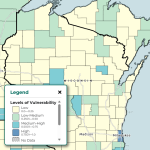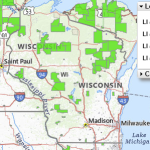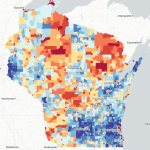
Vulnerability index for WI from the SVI interactive map

Social Vulnerability Interactive Map

The Social Vulnerability Interactive (SVI) Map, a product of the CDC Agency for Toxic Substances and Disease Registry, displays vulnerability indices for four categories: socioeconomic status, household characteristics, racial and ethnic minority status, and housing type and transportation.

Read More...
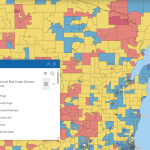
National Risk Index for southern WI from the FEMA Resilience Analysis and Planning Tool.

FEMA Resilience Analysis and Planning Tool

The Resilience Analysis and Planning Tool (RAPT) allows users to combine layers of community resilience indicators, infrastructure locations and hazard data. Users can visualize community resilience challenges to inform decisions around preparedness, mitigation, response and recovery.

Read More...
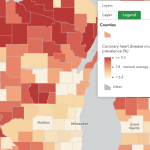
An example map from CDC PLACES

CDC PLACES

The data in the PLACES interactive tool is model generated by the Centers for Disease Control and Prevention (CDC) from various data sources. The map displays a comprehensive list of health related data from the county level down to the Census Tract level.

Read More...
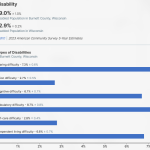
An example of the data available on the US Census County Profiles site

US Census County Profiles

The U.S. Census County Profiles offer a comprehensive and current socio-economic picture of each county in Wisconsin from economic, employment, and housing data to health, education, and demographics.

Read More...
The USDA Food Access map

USDA Food Access Research Atlas

The USDA Food Access Research Atlas and associated mapping tools provide county-level data identifying low-access areas by measuring the number of various types of food stores or markets by county and showing access indicators for different populations.

Read More...
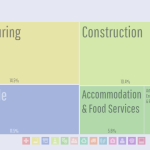
Screenshot of a typical data visualization from DataUSA

DataUSA

DataUSA is a public-private partnership leveraging U.S. Census and other public data using a flexible dashboard generator for geographies including state, county, and municipality, and Tribal area. Topics include employment, industry, education, income, housing, transportation, poverty, and health.

Read More...
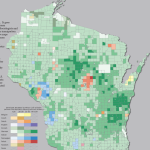
Ancestry map from the Applied Population Lab

Applied Population Lab Resources

The UW-Madison Applied Population Lab offers a tremendous breadth of interactive demographic and socio-economic tools, analyses, and reports. Some of these are detailed in this Data Inventory, but APL provides many more than can be listed here.

Read More...
A typical resource from the OAIC resources list

OAIC Resources for Outreach and Planning

In this document the UW-Extension Office of Access, Inclusion, and Compliance (OAIC) consolidates dozens of disparate federal and state data sources into a single, organized directory for rapid assessment.

Read More...
An example info-graphic from the WI DPI Youth Risk Behavior Survey

DPI WI Youth Risk Behavior Survey

The Wisconsin Youth Risk Behavior Survey (YRBS) has been conducted every two years since 1993. The health-risk behaviors monitored include mental health, traffic safety, weapons and violence, suicide, tobacco use, alcohol and other drug use, sexual behavior, nutrition, and exercise.

Read More...