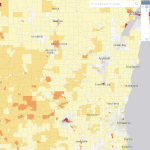
EPA’s EJScreen
EJScreen, the EPA’s Environmental Justice Screening and Mapping Tool is designed to highlight places that may have more exposure to health-impacting environmental risks and under-resourced or more vulnerable populations.
Read More...
EJScreen, the EPA’s Environmental Justice Screening and Mapping Tool is designed to highlight places that may have more exposure to health-impacting environmental risks and under-resourced or more vulnerable populations.
Read More...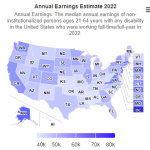
Disability Statistics is a state-level database designed to provide policy makers, advocates, journalists, and the public with access to demographic and socio-economic statistics on the non-institutionalized population of the U.S. with disabilities.
Read More...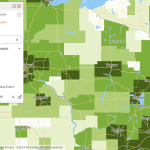
PolicyMap makes one of the most extensive lists of demographic and socio-economic variables accessible in one place—at nearly every level of geography imaginable. Current Census data exists alongside historical data of various types.
Read More...
StatsAmerica is an extensive and up-to-date collection of data and indices related to economic and community development. The site is also a handy source of Census and other federal data at the County, Place, or MSA level.
Read More...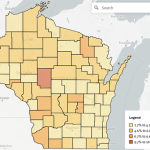
The Kids Count Data Center provides a convenient source of DHS, DPI, U.S. Census, and other data. Tables or maps for many socio-economic indicators that affect the lives of children and adults are available.
Read More...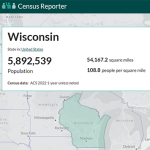
Census Reporter is a dashboard for visualizing Census data from the most current American Community Survey (ACS). Census geographies including State, County, and City can be selected using an interactive map.
Read More...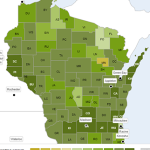
This website presents rankings by County across the U.S. of various health related topics in two categories: health factors, and health outcomes.
Read More...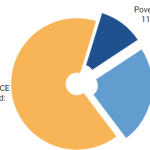
The United Way developed the ALICE (Asset Limited, Income Constrained, Employed) metric to examine the group of households earning more than the Federal Poverty Level, but not enough to afford the essentials for survival in the communities in which they reside.
Read More...
The DHS Open Data Portal provides an extensive list of data related to health and behavior including: birth and death rates, life expectancy, illness, insurance, public health, lead, mental health, and substance use.
Read More...
APL’s Hmong Chartbook is the most detailed information source available in regard to the Hmong/HMoob population of Wisconsin.
Read More...