The UW-Madison Applied Population Lab offers a tremendous breadth of interactive demographic and socio-economic tools, analyses, and reports. Some of these are detailed in this Data Inventory, but APL provides many more than can be listed here.
UW Extension’s Community Development Institute developed this comprehensive collection of data sources that are essential for communities to plan broadband implementations.
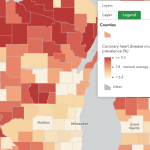
The data in the PLACES interactive tool is model generated by the Centers for Disease Control and Prevention (CDC) from various data sources. The map displays a comprehensive list of health related data from the county level down to the Census Tract level.
Census Reporter is a dashboard for visualizing Census data from the most current American Community Survey (ACS). Census geographies including State, County, and City can be selected using an interactive map.
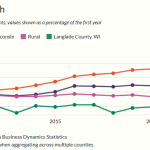
The Center on Rural Innovation (CORI) Economic Development tool allows users to create a custom dashboard of indicators focused on the strengths and weaknesses of the selected area’s economy.
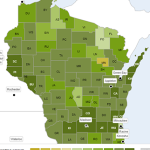
This website presents rankings by County across the U.S. of various health related topics in two categories: health factors, and health outcomes.
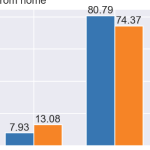
County Profiles, available exclusively to Extension colleagues with NetID login, contain data from public sources on each county in Wisconsin. Topics include demographics, health, employment, language, and economics.
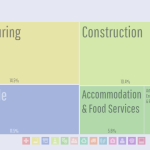
DataUSA is a public-private partnership leveraging U.S. Census and other public data using a flexible dashboard generator for geographies including state, county, and municipality, and Tribal area. Topics include employment, industry, education, income, housing, transportation, poverty, and health.

The DHS Open Data Portal provides an extensive list of data related to health and behavior including: birth and death rates, life expectancy, illness, insurance, public health, lead, mental health, and substance use.
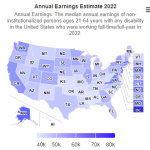
Disability Statistics is a state-level database designed to provide policy makers, advocates, journalists, and the public with access to demographic and socio-economic statistics on the non-institutionalized population of the U.S. with disabilities.
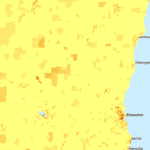
The Smart Location Database is designed to measure location efficiency—transportation costs and environmental impact, in particular. It includes more than 90 attributes summarizing characteristics such as housing density, diversity of land use, neighborhood design, destination accessibility, transit service, employment, and demographics.
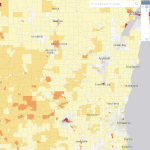
EJScreen, the EPA’s Environmental Justice Screening and Mapping Tool is designed to highlight places that may have more exposure to health-impacting environmental risks and under-resourced or more vulnerable populations.
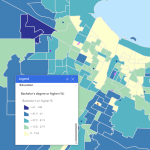
The EPD maps five categories of socioeconomic and demographic Census data at the County, County Subdivision, Tract, and Block Group levels, and includes a number of community assets for additional local context.
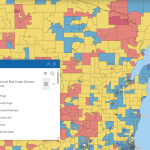
The Resilience Analysis and Planning Tool (RAPT) allows users to combine layers of community resilience indicators, infrastructure locations and hazard data. Users can visualize community resilience challenges to inform decisions around preparedness, mitigation, response and recovery.
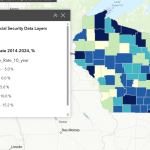
This resource, available only to logged-in wisc.edu users, provides a comprehensive suite of financial well-being indicators for Wisconsin, integrating data on assets, debt, employment, housing, income, and poverty from diverse sources.
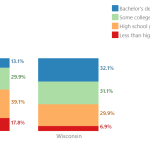
APL’s GetFacts is a tool for generating demographic profiles of Wisconsin Counties, County Subdivisions, or the State with a focus on population trends, health, housing, race and ethnicity, economics, or civil rights.
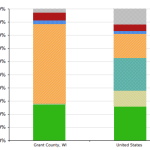
Headwaters Economics is a nonprofit research group focusing on community development and land management. Offered here are a number of tools designed to assess various types of risk at the county or community level.
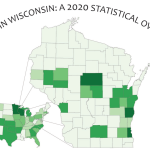
APL’s Hmong Chartbook is the most detailed information source available in regard to the Hmong/HMoob population of Wisconsin.
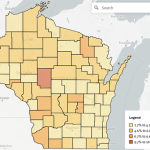
The Kids Count Data Center provides a convenient source of DHS, DPI, U.S. Census, and other data. Tables or maps for many socio-economic indicators that affect the lives of children and adults are available.
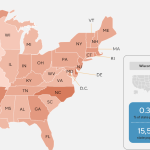
Data Interactives is a resource developed by UCLA to provide information about LGBT people in the U.S.
![Screenshot from the Map the Impact [of immigration] tool](https://fyi.extension.wisc.edu/programdevelopment/files/2026/01/MapTheImpact-150x150.png)
This census data visualization tool from the American Immigration Council centers on the economic impact of immigrants as found in ACS data. Topics include immigrant population share, taxes paid, spending power, number of entrepreneurs, and eligible voters.
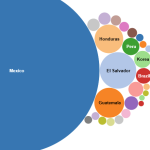
The Migration Data Hub provides comprehensive profiles and interactive maps detailing the demographics, geographic distribution, and socioeconomic characteristics of immigrant populations mostly at the state level, but some data is available at the county, and local levels.
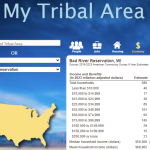
Finding data collected from Tribal Nation geographies can be challenging. This resource allows users to view statistics from the most current ACS aggregated and tabulated specifically to match the boundaries of the designated Tribal Geographies in Wisconsin.
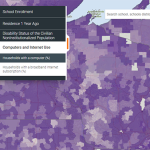
The ACS-ED interactive mapping tool allows the user to visualize socio-economic and demographic variables from the U.S. Census ACS by school district.
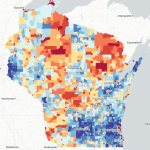
The Neighborhood Atlas, featuring the Area Deprivation Index, ranks census blocks based on socioeconomic disadvantage by aggregating 17 indicators related to income, education, employment, and housing quality. The Atlas can be a resource for precisely tailoring programs for areas where high levels of disadvantage may intersect with other needs.
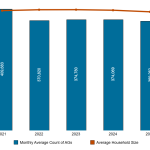
In this document the UW-Extension Office of Access, Inclusion, and Compliance (OAIC) consolidates dozens of disparate federal and state data sources into a single, organized directory for rapid assessment.
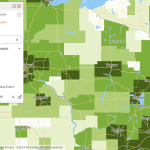
PolicyMap makes one of the most extensive lists of demographic and socio-economic variables accessible in one place—at nearly every level of geography imaginable. Current Census data exists alongside historical data of various types.
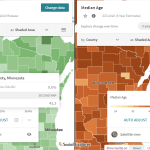
The Social Explorer, available with a UW NetID login, allows the user to access and map an extensive list of demographic, socio-economic, health, environmental, business, and election data sets.
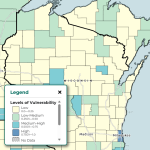
The Social Vulnerability Interactive (SVI) Map, a product of the CDC Agency for Toxic Substances and Disease Registry, displays vulnerability indices for four categories: socioeconomic status, household characteristics, racial and ethnic minority status, and housing type and transportation.
StatsAmerica is an extensive and up-to-date collection of data and indices related to economic and community development. The site is also a handy source of Census and other federal data at the County, Place, or MSA level.
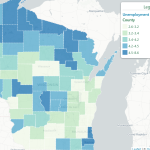
APL’s Wisconsin Food Security Project provides data to help identify food security strengths, risk factors, and gaps via socio-economic factors.
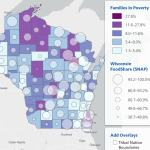
APL’s Wisconsin Risk and Reach Project assesses potential gaps between publicly funded programs and community risks especially as they relate to children and families.
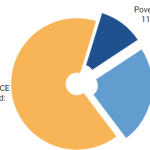
The United Way developed the ALICE (Asset Limited, Income Constrained, Employed) metric to examine the group of households earning more than the Federal Poverty Level, but not enough to afford the essentials for survival in the communities in which they reside.
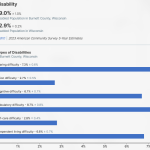
The U.S. Census County Profiles offer a comprehensive and current socio-economic picture of each county in Wisconsin from economic, employment, and housing data to health, education, and demographics.
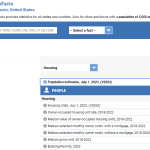
The U.S. Census’ QuickFacts site provides a customizable table of common demographic and socio-economic statistics for the U.S., individual States and Counties, or cities and towns with populations of more than 5,000 people.
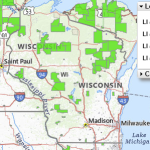
The USDA Food Access Research Atlas and associated mapping tools provide county-level data identifying low-access areas by measuring the number of various types of food stores or markets by county and showing access indicators for different populations.
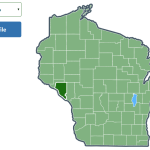
The Net Migration tool from the UW Applied Population Lab allows users to access a migration profile for each Wisconsin County for the decade starting in 2010.