Growing up on the Wisconsin River in the 1960s, Arnie DeWitt remembers the not-so-pleasant smell and look of the water. “There would be foam on top of the river, maybe a foot thick,” he said. Now, DeWitt lives in Burnett County near the Yellow River, which currently meets criteria for high-quality water according to the Wisconsin Department of Natural Resources (DNR). He wants it to stay that way.
That motivates him to help monitor water quality in his community. DeWitt became a stream monitor with the Water Action Volunteers (WAV) Program in 2022 and is now the local WAV volunteer coordinator for the Yellow River Protection Conservancy. In that role, he supports 17 volunteers who collect baseline water quality and aquatic macroinvertebrate data at 9 sites and phosphorus levels at 6 sites along the Yellow River. That data is collected and shared in a statewide database so the DNR can track how the Yellow River is doing.
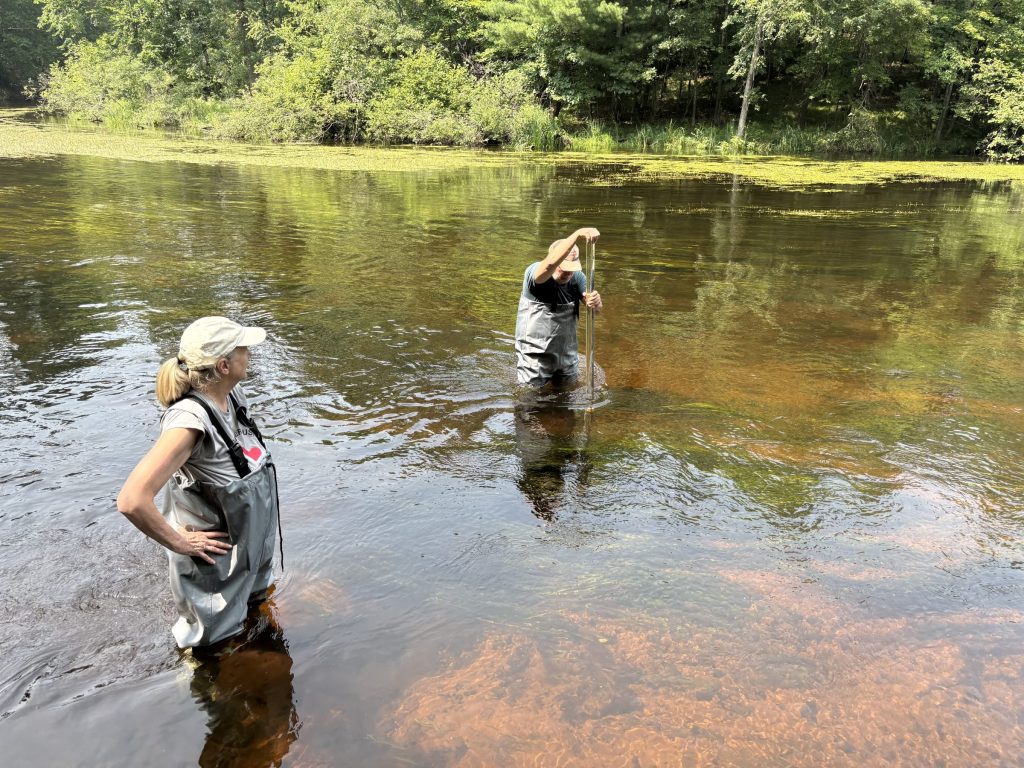
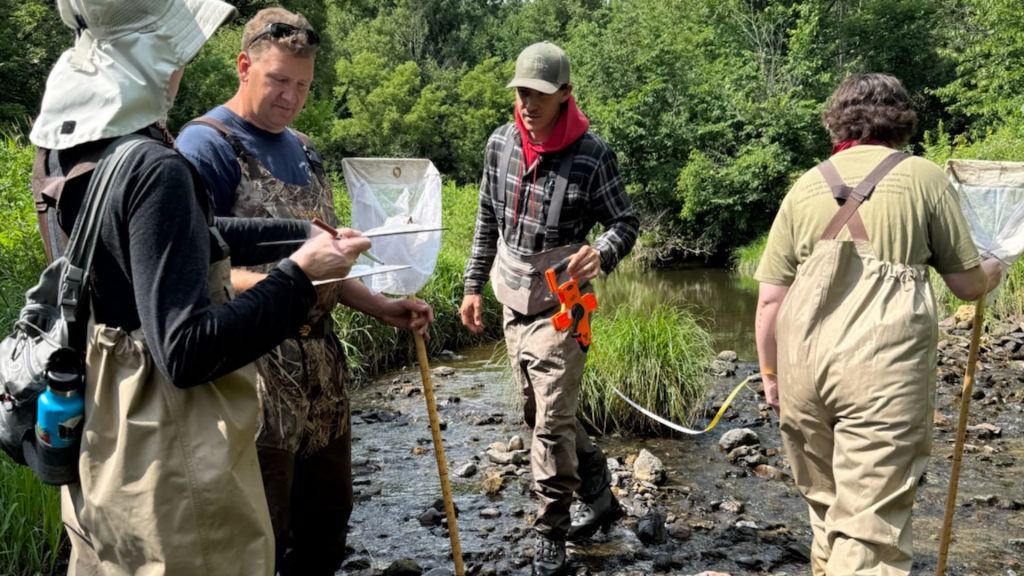
With over 86,000 miles of streams and rivers in Wisconsin, volunteers play a critical role in monitoring the health of Wisconsin’s waterways. They do so with the support of WAV, a program administered through UW–Madison Extension. WAV provides local organizations and agencies, like the Yellow River Protection Conservancy, with free monitoring equipment to get started, hands-on training, and standard protocols for data collection.
Collecting high-quality data
With major funding and support from the DNR, WAV works with local agencies and organizations, helping them develop and run volunteer programs. DeWitt considers WAV vital to his work as a coordinator, helping to ensure that volunteers throughout the state are using the same procedures. “Without WAV, we’re making up our own protocols and our own procedures,” he said. “If you don’t have a standard protocol for your process, you’re going to have so much variability in the procedure that the outcoming data doesn’t really mean anything.”
He gives the example of measuring dissolved oxygen. It’s important to take measurements at similar times of the day because dissolved oxygen differs based on the amount of sunlight, photosynthesis, and stream temperature happening at that moment, which changes throughout the day. “If you’re not testing consistently, roughly at the same time of the day, your numbers are going to be all over the place,” he said. That makes it hard for him to know if the variability is a water quality issue or a data collection problem.
Helping communities care for their resources
Retta Isaacson, Water Quality Planner for the Pierce County Land Conservation Department, collaborates with WAV as well. She agrees with DeWitt on the importance of having data collection protocols. “To have an accessible way to do a standard procedure is amazing, because otherwise, without it, we wouldn’t know if streams were being impacted or not.”
Because of Pierce County’s topography, groundwater contributes significantly to streams. And those cold water streams are ideal for trout. “We have a lot of very cold trout streams and some very active trout fishermen that love to visit and love to live here,” she said. Because trout are very sensitive to temperature changes and oxygen levels, baseline monitoring, including temperature and dissolved oxygen measurements, is essential.
For local residents who value the high-quality streams, having access to data has been appreciated. Isaacson said she often hears from residents with water quality concerns. She uses that concern to introduce them to WAV’s Data Dashboard, where they can check measurements like temperature and dissolved oxygen. She also suggests, “If you want to know about how well your stream is doing in your own backyard, or you might be worried about it, check in with it. Sign up to be a WAV volunteer.”
Using data for decision-making
Volunteers keep an eye on water quality locally, while also helping contribute to the larger picture. Dave Bolha is one of 12 Stream Water Quality Biologists at the DNR who assess, protect, and restore flowing water resources throughout the state. “WAV increases our assessment range immensely!” he said, noting that without volunteers, there would be data gaps across Wisconsin that the DNR would not be able to fill.
Bolha has worked with volunteers for over 10 years and he appreciates their knowledge and insights. “Many of the volunteers I meet know more about the stream or river they monitor than I will ever know. The program provides me with the proverbial ‘eyes and ears’ out there.”
That helps when conditions start to change. Bolha says there are times when volunteer data serves as an early or late warning system, indicating that the system is being stressed or impacted by an unknown influence. When data shows a stressed watershed, that provides more incentive for the DNR to fund projects to help reduce those stresses. “Their efforts save me time and money, and provide an opportunity for me to be more thorough in my assessments.”
While it’s common for volunteers and concerned citizens to think that monitoring is going to unveil big problems, Bolha, Isaacson, and DeWitt say that’s not the case. “One of the best uses of volunteer data is showing just how good and healthy our water quality is in Wisconsin,” said Bolha.
Building organizational support
When people think of WAV, they often picture volunteers knee-deep in a stream. But, for Katy Bradford, WAV Program Manager at Extension, WAV’s most important work is providing support to the organizations and local WAV coordinators who support those volunteers. “WAV Program staff keep in close touch with local WAV coordinators who are working on the ground in their communities to engage their volunteers in caring for their streams and rivers. We provide the statewide expertise and resources so they can focus on their local monitoring and educational goals,” she said.
That was the experience for Isaacson. When she began working for Pierce County she had limited experience with stream monitoring. “My background is geology, hydrogeology. I can talk to you about the well-water side of things, but the surface-water side is a little bit newer,” she explained. The WAV Program provided her with the training and support she needed to start a stream monitoring program. “They are so good at answering questions when weird things happen and I have no idea how to deal with it, or even just clarification on some of the standard procedures,” she said. And as she works with volunteers locally, Isaacson has bounced ideas off of the WAV team to help her find a structure that works for her community.
That often means more than training and logistics. Currently, WAV works with over 50 organizations to provide support for volunteer stream monitoring efforts, such as recruiting and retaining volunteers, deciding where to monitor, providing learning opportunities for volunteers, and more. “We can provide that additional support to groups and organizations who want to grow their volunteer monitoring program. Thinking about these additional aspects of supporting and engaging volunteers can make all the difference in the long-term success of a program,” said Bradford.
Inspiring stewardship
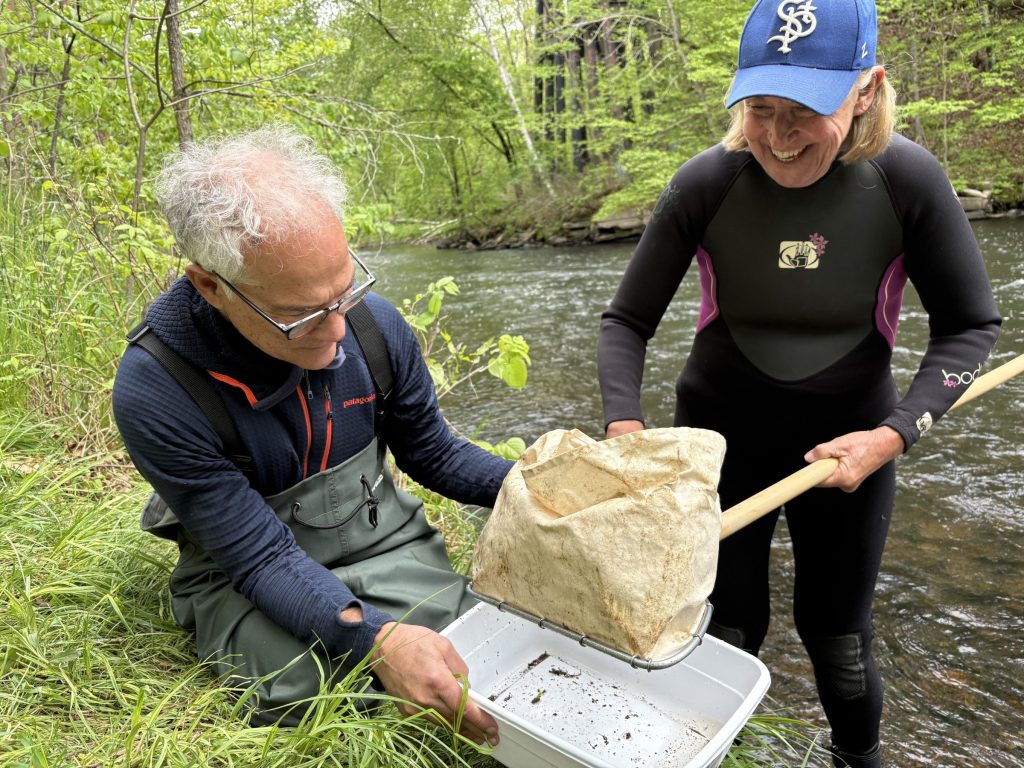
Bradford is quick to remind that the biggest benefit of WAV is motivating a new generation of community-engaged stewards who actively keep an eye on their local waterways. Inspiring more than 600 volunteers each year to take an active role in caring for and protecting Wisconsin’s waterways is powerful in and of itself.
Through his work at the DNR, Bolha places a lot of value on engaged community members. “Citizen science gets the public engaged in the natural world around them. Streams and rivers are dynamic, lively systems that change through the seasons, through the years. It provides an opportunity for volunteers to talk about the resources they typically care so much about, not only with other volunteers, but with other members of the public who witness what they are up to.” For Bolha, having more people engaged in caring for and about our water resources is priceless.
DeWitt has watched people in his community go from interested to passionate. “The more they volunteer, and they start seeing the benefits of the volunteering, the more they become passionate about it, and the more passion they have towards it, the more they work towards those goals. And in the end, you end up with healthy water, healthy rivers, healthy lakes.”