Patrol Captain Mike Kowalski believes in giving teens a second chance. For youth, a citation can have negative impacts on their future. They can find themselves disqualified for military service or have difficulty securing student loans. Disclosing a violation on a job or college application can reduce their chances of success. And that has an extra impact when a young person is just starting their life. “We’re talking about non-violent offenses for first-time offenders here,” said Kowalski.
That does not mean that he looks the other way when teens break the law; he refers them to the Marquette County Teen Court Program. Teen courts, some of which have been set up in partnership with counties and UW-Madison Extension, offer an alternative to going through the court system and paying fines. When teen courts use restorative practices, the focus is on having teens reflect on the impact of their actions and make amends for what they’ve done.
As the parent of a teenager, Kowalski has a new appreciation for the teen court process. “When my son came home with a traffic citation, I contacted the issuing officer and asked if he could do teen court instead of paying the fine,” said Kowalski. The issuing officer asked if he was sure he wanted his son to do all the extra work involved in teen court. He did, because he knew the experience would help his son understand the situation in a way that paying a fine would not. “We have an opportunity to teach teens how their actions affect others. Paying a fine, especially if it’s their parents’ money, might not teach them anything,” said Kowalski. Through teen court, teens talk with peers about the harm their behavior has or could cause to all of those involved, and that perspective-taking process is important.
Because their frontal lobe is still developing, youth have some limitations in their ability to make decisions that take their future and the people around them into account. According to Jonathan Scharrer, University of Wisconsin Law School Clinical Associate Professor and Director of the Restorative Justice Project, a teenager’s capacity for empathy and working on conflict resolution skills is developing. “In thinking about how we empower youth to find and embrace their own talents and their inner strengths, to thrive rather than being stuck in cycles of harm or violence, how instead do we help youth change that narrative to one of harmony where they feel connected to and a part of their community?” That shift has lasting impact on individuals and the community.
What is Teen Court?
In Marquette County, when a teen violates a law or a school policy, such as vaping or theft, the school official, law enforcement officer, county social worker, or judge can refer them to teen court in lieu of a court appearance. Once referred, the teen appears before a panel of peers to discuss the violation and determine the best way to make amends. The panel asks questions to figure out the root cause of the behavior and how the teen can rethink their behavior, repair relationships, and restore their image in the community.
Christa Van Treeck, Associate Professor and 4-H Youth Development Educator in Marquette County, played a key role in initiating the teen court program. Now, she works with county partners to manage the program, train panelists, and support the youth involved. As part of the Positive Youth Development Institute at UW-Madison Extension, her goal is to partner with youth to make sure that youth voices and a restorative approach are at the center of the program.
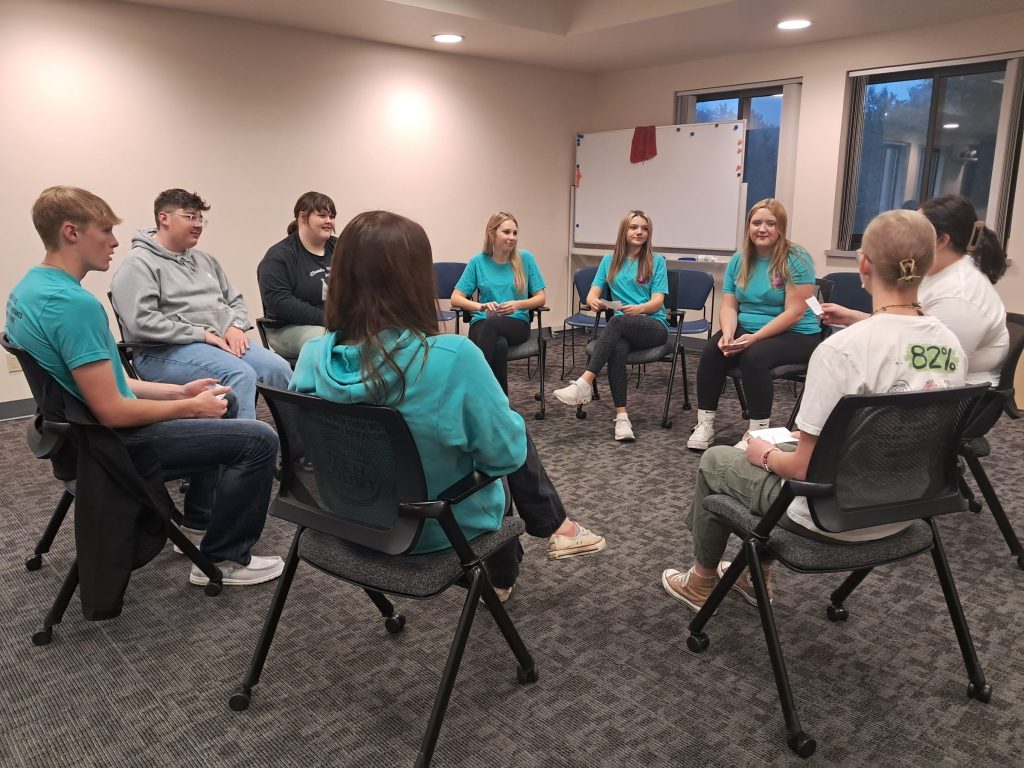
She explains that teen court is different from how you picture a traditional courtroom. “We literally sit in a circle with just chairs,” said Van Treeck, “engaging in a conversation led by the youth with the person who has been referred and their parent or guardian.” Based on that discussion, all the individuals in the circle agree upon requirements that are customized to each person and are meant to be educational, not punitive, in order to restore their relationships with peers, school, family, and community members. If the requirements are not met within a certain time frame, the case is sent to the judge or the referring agency where the teen enters the court system with a citation.
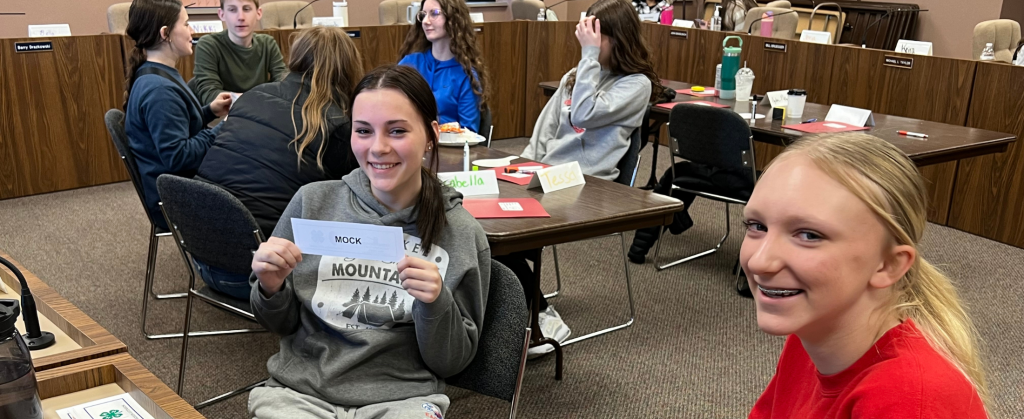
A central aspect of teen courts that utilize restorative practices are the youth panelists. Teens apply to be on the panel. They go through a training process to learn about restorative justice and the role of collaborative discussion. Before each case, Van Treeck meets with the youth to support them in preparing questions and stays during the session in case youth have questions or need guidance.
Having a panel of youth is particularly meaningful for teenagers as they expand their own awareness and develop into their own people. That often means testing boundaries against adults. “There are ways in which they will hear what a peer has to say in a way that someone older may not be able to reach them,” said Scharrer. Youth are often more open to hearing from their peers because there is a sense that they have similar struggles and are going through the same things. That understanding provides a different dynamic when youth begin to discuss their behavior.
Benefitting Youth
Buffalo and Pepin Counties share a teen court where Annie Lisowski, Extension Professor and Associate Director of the Positive Youth Development Institute, helped establish the program. “Teen court hearings in Buffalo and Pepin Counties use a restorative approach. It’s a 360-degree approach so youth with violations receive requirements to complete from their peers aimed at rethinking their behavior, repairing relationships, and restoring their image in the community,” said Lisowski.
She works closely with Danielle Schalinske, Social Services Manager and Youth Justice Coordinator in Buffalo County. Schalinske has been active with teen courts and youth justice for over 20 years, sending referrals to the program and serving on the county advisory committee.“The adult system is really a consequence-based system. You go to jail, you get sentenced, you serve community service,” said Schalinske. “In contrast, the idea behind the juvenile justice system is that it should be more restorative. It should be behavior-changing so they do not reoffend.”
Schalinske often talks with youth after they have finished their requirements. “It’s very interesting to hear kiddos talk to you about, you know, ‘it was scary. I didn’t want to tell these kids my age what I did. My parents were sitting in the room, and they got to hear it all too.’” Schalinske finds that having them actually process that other people have feelings when they do things to them can be very effective.
“It’s clear that the program is working when you can watch the kiddos process through trying to think from someone else’s side about why this affected them,” said Schalinske, “and then you sit down in that final meeting, and they’re able to say, ‘Yeah, I thought about if someone took my things, how I would feel and what that would mean to me.”
Schalinske considers teen court to have a two-fold benefit, both for those who volunteer as panelists and the youth who are referred. There is value in having a group of youth come together to work collaboratively, reach consensus, and exercise decision-making. “Offering these opportunities to youth helps develop communication skills, conflict resolution skills, helps develop them in their own self-confidence, but also leadership abilities,” said Scharrer. The youth involved need to understand that there are nuances to situations and that resolutions are not cookie-cutter. That helps to bring youth out of their binary thinking patterns, encouraging them to see that there are multiple solutions to singular problems.
Benefitting everyone involved
The benefits go beyond the youth involved. Research shows that when victims are included in the process, they benefit as well. Victims are less likely to be upset about the crime, less likely to fear re-victimization, have a significantly lower fear of the offending youth, and show a reduction in long-term stress when they are part of the restorative process. Having the ability to ask questions and express their perspective is important for healing.
And, restorative processes are beneficial to the community as well. Scharrer has been involved in restorative circles where community members have shared their perspective. He was surprised at how community involvement affected the youth. “They’ve said in those circles that this is the first time I’ve ever heard that anyone in the community even truly cares about me. And that they were really moved by that and it affected how they viewed their own behavior and connection to other people,” said Scharrer.
“The idea is when someone is harmed or hurt, the response isn’t how do I hurt that person back? Or how do I repay hurt with hurt? Instead, to say ‘How do we sit down together, take a look at this problem, figure out what’s the best solution to that problem, and how do we all go forward?’” Taking the time to do that can have a significant impact on helping youth see themselves as a positive, productive member of the community. When people feel engaged and connected to their community, they’re less likely to engage in harmful or destructive behavior.
Making a positive impact
Schalinske has been impressed with the results of teen court. “I’m not seeing those kiddos come back after completing teen court. So they were either low level and weren’t going to commit new crimes or they’ve learned something in the process.”
In fact, studies have shown that youth who go through a teen court are less likely to re-offend, seeing on average a 30% reduction in recidivism and as high as 80% reduction in recidivism when the program includes restorative practices. Further, when youth have gone through a restorative process such as the teen courts in Marquette, Buffalo, and Pepin Counties, of those who re-offend, rather than offenses escalating or getting higher, individuals who do end up recidivating typically commit less serious offenses and it takes them significantly longer to re-offend compared to the general population.
“Restorative justice really is a future-oriented process that separates the person from the behavior. It says we, as a community, don’t agree with this behavior, but we are not labeling and ostracizing or engaging in exclusionary processes with the youth in question,” said Scharrer. Instead, teen courts offer them a pathway back. “And oftentimes we adults can be quite surprised by the incredible insight and wisdom that can be given to us by our youth.”
A previous version of this article was published in the Wisconsin Counties Association magazine.