

Volunteer Opportunities
WIFDN supports a variety of volunteer opportunities to fit your interests and schedule. Read about current opportunities below and stay tuned for new opportunities!
Critical Period Cutting for invasive woody plants
We have undertaken critical period cutting (CPC) on invasive woody plants like buckthorn and honeysuckle. This is a mechanical, non-chemical technique that involves removing growing leaves and branches at critical times in the life stage of the plant. This is done in spring (May/June) after full leaf out and fall (September) before leaf color change. This timing stresses the plant by removing it’s energy creation method after it has fully invested in green tissues, and then again before the sugars created can be translocated in to the roots.
You can find a detailed factsheet from the Friends of the Mississippi River here. If you are interested in doing this as a citizen science project, you can find resources at a Google Drive folder here. Contact WIFDNcoordinator@gmail.com to be included in our research or with questions.
Report Invasive Species
Resource managers and researchers rely on citizen scientists across the state to report invasive species. Use the free EDDMaps app to easily map invasive species and submit your reports to WIFDN! It takes less than a minute to create a report, so this opportunity fits into any schedule, any season. Visit the EDDMapS website to register for an account, edit your reports, view invasive species profiles and distribution maps, and more!
Get started with the one page EDDMapS App Guide (pdf)!
Access a full series of EDDMapS Pro tutorial videos for Android and iOS on the EDDMapS Training page.

Detect Emerald Ash Borer with the Wasp Watchers Project
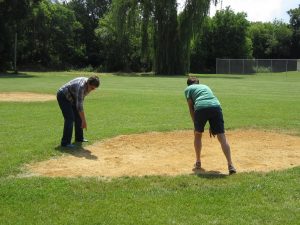
Help survey for invasive emerald ash borer (EAB) and its relatives by walking your local baseball field! One of Wisconsin’s native, stingless wasps, Cerceris fumipennis, provisions its nests with metallic wood boring beetles like EAB. And, you guessed it, the wasps nest in sandy areas, like baseball fields. The project runs from June – September each year. You can do as little as scout a local field once or as much as visiting active nests once per week.
Learn more at our Wasp Watchers page!
Monitor for Spotted Lanternfly
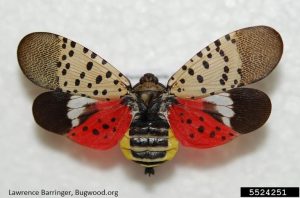
Look for spotted lanternfly and map it’s preferred host plant, the invasive tree-of-heaven. Learn more at the Spotted Lanternfly page!
Report a Pigweed
Palmer amaranth and waterhemp are problematic pigweed species, especially in our agricultural lands. Look for and report these species. Learn more at the Report a Pigweed page!